
In today’s digital era, “Blockchain” is a word that echoes through every corner of the tech and corporate world. Whether you are reading about Bitcoin, scrolling through fintech news, or looking into secure enterprise infrastructure, blockchain always takes center stage. However, a major issue with most online resources is that they are packed with heavy, dry technical jargon. If you do not have a computer science degree, it is easy to feel completely left in the dark.
But here is the reality: blockchain is a brilliantly simple concept once you strip away the complex vocabulary. Whether you are a business owner looking to deploy next-gen applications, a software engineer trying to understand modern architecture, or a non-tech enthusiast curious about the future, this comprehensive guide is built for you. We will break down exactly what is blockchain technology, how it works under the hood, and why it is transforming the global web ecosystem.
What is Blockchain Technology? A Simple Analogy
To truly grasp blockchain, let us first look at how traditional centralized systems work, such as a standard bank. Imagine Rahul wants to send $100 to Amit. To make this happen, both Rahul and Amit rely on a trusted third party- the bank. The bank maintains a private digital ledger (a master spreadsheet) that records the transaction: it subtracts $100 from Rahul’s account and adds $100 to Amit’s account.
In this scenario, the bank has 100% control over the data. This is a classic Centralized System. While it works, it introduces critical single points of failure. If the bank’s servers crash, if a malicious hacker breaches their database, or if internal corruption occurs, the entire system is compromised.
This is exactly where blockchain technology steps in to change the game.
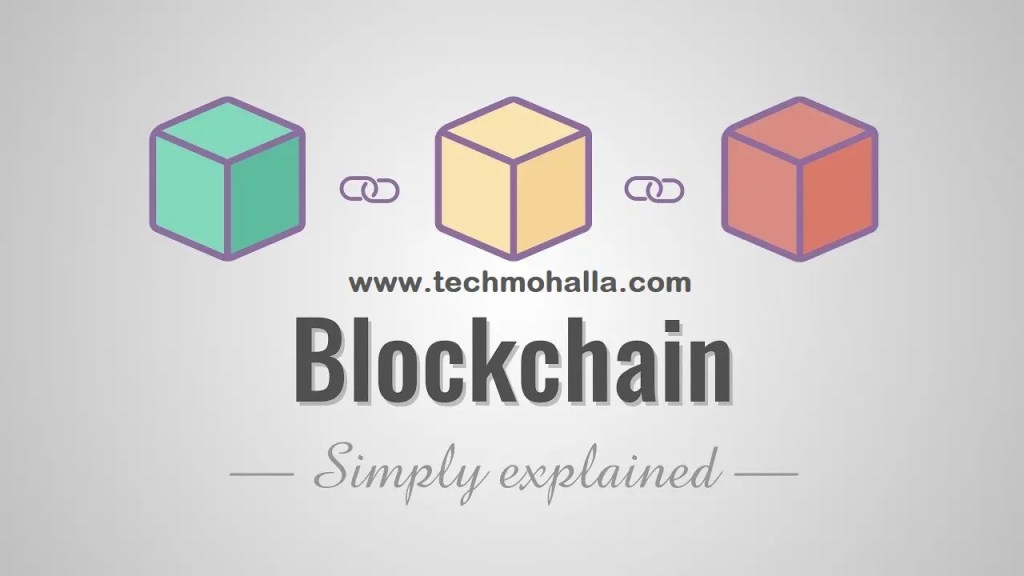
Instead of relying on one centralized entity to hold the ledger, a blockchain distributes that ledger across a massive network of computers worldwide. These computers are called nodes. When Rahul sends digital assets to Amit on a blockchain network, the transaction is not verified by a single bank. Instead, thousands of independent computers verify the transaction simultaneously. Once approved, every single computer updates its own copy of the ledger. There is no middleman, no central server, and no single point of failure.
Under the Hood: The Architecture of a Block
Structurally, a blockchain is exactly what its name implies: a continuous digital chain of blocks. Each individual block acts like a page in a ledger book. When a page fills up with transaction data, it is securely locked and chained to the previous page.
Every single block in a blockchain contains three fundamental components:
- The Data: This contains the actual transaction information. For instance, it records the sender’s identity, the receiver’s identity, and the exact amount of digital assets transferred.
- The Hash: Think of a hash as a unique digital fingerprint. It is a long string of numbers and letters generated by a cryptographic algorithm (like SHA-256). The hash perfectly represents the exact contents of that block. If you change even a single comma or decimal point inside the data, the entire hash code changes instantly and dramatically.
- The Hash of the Previous Block: This is the magical element that creates the “chain.” Every block stores the unique digital fingerprint of the block that came right before it.
The Security Logic: Why It Is Impossible to Hack
Let us trace a hypothetical security scenario. Imagine a sophisticated hacker gains unauthorized access to a server and attempts to alter transaction data inside Block 2 to steal funds.
The moment the hacker tampers with the data, the hash of Block 2 changes instantly. Now, look at Block 3. Because Block 3 is designed to store the original hash of Block 2, it notices a mismatch. The chain breaks immediately. Block 3, Block 4, and every subsequent block on the network become completely invalid.
Furthermore, blockchain relies on a strict Consensus Mechanism (like Proof of Work or Proof of Stake). If one compromised computer tries to push a tampered ledger, the remaining 99% of computers on the network will look at their own identical copies, spot the fraudulent data, and instantly vote it out of the system. To successfully hack a major blockchain, someone would have to hack more than 51% of all computers on the network at the exact same fraction of a second- a feat that is practically impossible and economically unfeasible.
The Three Pillars of Blockchain Technology
The reason enterprise industries are heavily migrating toward blockchain architecture comes down to three core, non-negotiable benefits:
- Decentralization: Power is shifted away from massive monopolies and central authorities. Transactions happen peer-to-peer (P2P), meaning direct communication and trade between two parties. This radically slashes third-party transaction fees and speeds up processing times.
- Absolute Transparency: While user identities are safely encrypted behind public-key cryptography, every single transaction path ever executed is visible to the public. Anyone can pull up a blockchain explorer tool to verify a transaction. In an era where data transparency is paramount, blockchain leaves zero room for hidden manipulations.
- Immutability: Once a block of data is verified, compiled, and successfully appended to the chain, it becomes permanently written in stone. No human being, no corporate entity, and not even the core software engineer who originally designed the system can delete, reverse, or edit that entry.

Beyond Cryptocurrency: Real-World Business Applications
A common misconception is that blockchain is just a fancy synonym for Bitcoin or digital currencies. In reality, cryptocurrency is merely the very first software application built on top of this infrastructure. Today, senior architects and global enterprises utilize blockchain to solve massive real-world business challenges:
1. Smart Contracts
Smart contracts are automated, self-executing programs stored directly on the blockchain. They operate on a simple “If/Then” logical framework. For example, an insurance smart contract can be programmed to state: If a flight is delayed by more than 2 hours, then instantly release a 50% refund to the passenger’s wallet. There is no paperwork, no waiting for claims adjusters, and no manual processing delays. It eliminates administrative friction entirely.
2. Supply Chain Orchestration
Global supply chains are incredibly fragmented. Massive corporations use blockchain to track products from their raw material phase all the way to the retail shelf. For example, if a consumer buys organic coffee, they can scan a barcode on the packaging to trace the exact farm where the beans were harvested, the date they were roasted, and the shipping container path. Fake documentation or counterfeit products cannot slide into a blockchain-tracked supply chain.
3. Decentralized Identity Management
Data breaches and identity thefts are major vulnerabilities in modern web architecture. Traditional databases store user passwords and personal data in central locations that invite cyber-attacks. By moving identity data to a decentralized blockchain framework, users gain absolute ownership over their credentials. You can verify your age or credit score to a service provider without ever revealing your raw personal details.

Conclusion: The Future of the Global Web
Understanding what is blockchain technology clarifies that it is not a passing tech trend or a speculative financial bubble. It represents a fundamental evolution in how data is stored, shared, and trusted across the world wide web. As user trust in central monopolies continues to decline, decentralized architectures offer a secure, highly scalable, and mathematically verifiable alternative.
[ Next Architecture Logs ]

